

Qingdao's maritime past meets modern memory
chinadaily.com.cn
In Shinan district of Qingdao, at No 19 Taiping Road, the Tianhou Temple stands as a quiet witness to five centuries of history. Now also the Qingdao Folk Museum, this cluster of Ming and Qing dynasty (1368-1911) buildings embodies the city's maritime soul.
Built in 1467 as three tiny rooms to the sea goddess Mazu, Tianhou Temple grew with merchant donations, acquiring an opera stage and bell tower that guided sailors home across stormy Jiaozhou Bay. Repairs in 1936, state protection in 1982 and a full restoration in 1996 saved the shrines, courtyards and curved eaves from salt-air decay.
Curators now fill the halls with hand-nets, ship models, and faded photographs of early jetty markets, claiming that maritime trade forged the port's later openness to foreign architecture and industry.
While Qingdao is known for its red-tiled roofs and diverse architectural styles, the Tianhou Temple reveals a deeper heritage of maritime culture: openness, inclusiveness, and resilience.
Today, the Tianhou Temple, integrating folk, maritime, and Mazu cultures, is not just a historical site but a living reminder of Qingdao's enduring spirit. It tells the story of a city that thrives by the sea, whose true charm lies in the culture that echoes through the ocean breeze and alleyways.
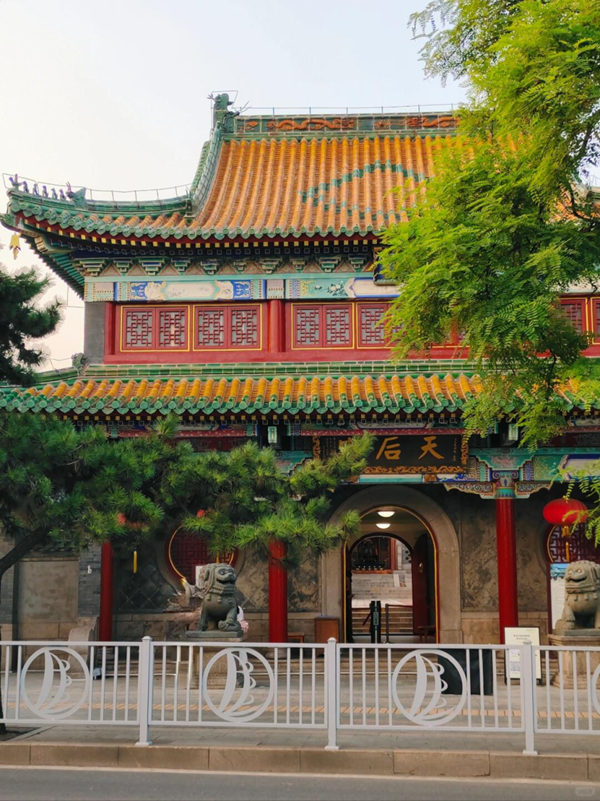
Tianhou Temple, a walled cluster of Ming and Qing dynasties timber buildings in Shinan district, is also known as the Qingdao Folk Museum. [Photo/WeChat account: qdweishinan]